Pricing

Our Honest Approach to Data Recovery Diagnostics and Pricing
What Your Diagnostics Fee Covers
-
Investigative Engineering Labor: A senior data recovery engineer personally isolates your drive under a microscope or connects it to advanced hardware emulators to read your system's raw microcode tables.
-
Specialized Hardware Costs: We utilize industry-leading diagnostic stacks, micro-soldering gear, and hardware write-blockers that safely interact with failing media without modifying your original files.
Guiding Your Final Price: Our "No Data, No Cost" Guarantee
- Details
- Written by: Seattle Data Recovery
- Category: Pricing
When data loss occurs, especially with RAID arrays, it can be a stressful experience. Fortunately, Seattle Data Recovery specializes in data recovery that is not only efficient but also fair in pricing. Understanding the complexities of RAID data recovery can help customers make informed decisions when seeking assistance. This comprehensive guide will delve into the factors that affect the cost of data recovery for RAID configurations, providing insights for potential clients.
Understanding RAID: The Basics
RAID, which stands for Redundant Array of Independent Disks, is a data storage virtualization technology that combines multiple physical disk drive components into one or more logical units. The primary purpose of RAID is to improve performance, enhance fault tolerance, and provide redundancy. Different RAID levels, such as RAID 0, 1, 5, 6, and 10, offer distinct advantages and challenges. Understanding these configurations is essential when considering the potential costs of data recovery.
To elaborate, RAID 0 stripes data across multiple drives, enhancing performance but providing no redundancy. In contrast, RAID 1 mirrors data across two drives, ensuring a copy exists if one drive fails. More complex configurations like RAID 5 and 6 add a layer of parity data, which allows for specific drives to fail without data loss, yet also complicates recovery efforts, consequently impacting pricing.
Factors Affecting RAID Data Recovery Cost
The cost of data recovery for RAID arrays varies significantly based on several critical factors. At Seattle Data Recovery, we emphasize transparency about these costs so clients can better prepare financially. The factors include RAID level, number of drives, type of drives, and nature of the issues encountered. Let's break down each component.
Firstly, the RAID level plays a pivotal role in determining recovery costs. More complex RAID configurations, such as RAID 5, 6, or 10, generally necessitate advanced recovery techniques. This complexity may significantly drive up service fees. In contrast, a simple RAID 0 configuration may only incur minimal costs.
The Number of Drives: A Key Consideration
The number of drives in a RAID array also significantly affects the overall recovery cost. With each additional drive, the potential costs may escalate. For instance, if multiple drives within an array fail, the recovery process becomes increasingly intricate and time-consuming. This can result in a higher price due to the additional labor and resources required.
Additionally, the more drives involved, the greater the risk of compounded failures. This scenario can emerge if the RAID controller or system malfunctions, leaving numerous drives vulnerable to cascading failures. At Seattle Data Recovery, we assess the entire system to provide an accurate cost estimate based on the number of drives and their current condition.
Drive Size Matters
Another fundamental factor affecting the cost of RAID data recovery is the size of the individual drives. Larger drives tend to incur higher recovery expenses due to their increased storage capacity. The complexity of retrieving data from substantial volumes complicates the recovery process, often resulting in longer recovery times and, in turn, higher fees.
Moreover, drive size can influence the types of tools needed for recovery. Larger datasets require more robust technologies and advanced software solutions for effective extraction, thereby further increasing overall costs. Therefore, clients should consider each drive's capacity in their RAID array when estimating potential recovery costs. Seattle Data Recovery's rates for RAID recovery start at $1800 per device for hard drives and SSDS larger than 2 TB and $2500 per device for hard drives and SSDs larger than 8 TB.
The Nature of the Issue: Physical vs. Logical Problems
Understanding the nature of the issue at hand is crucial in estimating data recovery costs. Physical issues, such as head crashes or severe hardware failures, often entail higher recovery fees. These scenarios require specialized tools and expert technicians to repair or replace damaged components, resulting in extensive labor and resource requirements.
On the other hand, logical issues, like file system corruption or accidental deletion, typically cost less to resolve. In cases where the RAID structure is intact and the drives are operational, Seattle Data Recovery can perform a successful recovery with fewer complexities, ultimately resulting in lower prices. It's essential to determine whether the recovery process will be physical or logical to gauge potential expenses accurately.
Service Level: The Price of Urgency
The urgency with which a data recovery service needs to be performed can also affect overall costs. Seattle Data Recovery offers various service levels, from standard recovery services to expedited or emergency options. If a client requires immediate recovery due to critical business operations, this expedited service typically incurs additional charges.
Furthermore, it's essential to evaluate the rationale behind the urgency. While immediate recovery can save businesses from potential losses, clients need to balance the need for speed with the associated costs. Our team at Seattle Data Recovery strives to offer a solution tailored to individual situations while being upfront about pricing implications.
Pricing Models: What to Expect
When it comes to RAID data recovery, the pricing structures can vary significantly from one service provider to another. Understanding these different models can help clients feel prepared for the costs they might encounter. At Seattle Data Recovery, we subscribe to a transparent pricing framework that allows clients to understand the financial implications of their recovery options.
Typically, the cost breakdown would range from low-end rates for simple configurations and logical issues to high-end rates for complex RAID setups with extensive physical damage. Low-end recovery generally ranges from $300 to $600 per drive, while mid-range cases can cost $600 tod $1,200 per drive. High-end setups could see costs soar to $1,200 per drive and beyond. This hierarchy ensures our clients know what to expect and can budget accordingly.
Preparing for Unexpected Costs
While our pricing models outline a range for data recovery, clients should anticipate unforeseen expenses. Situations may arise in which additional repairs or extended recovery efforts may be necessary, pushing overall costs beyond initial estimates.
For clients undergoing physical repairs, there may be additional fees for replacing parts or using specialized tools. Our team is committed to keeping clients informed throughout the recovery process, ensuring there are no surprises. Clients can rest assured that Seattle Data Recovery prioritizes communication and transparency.
Choosing the Right Data Recovery Company
Selecting the right data recovery company is paramount in ensuring a successful outcome. Pricing structures often differ, and clients should evaluate not only the costs but also the quality of services offered. Seattle Data Recovery prides itself on its reputation and commitment to delivering exceptional results at fair prices.
When exploring different companies, clients should consider reviews, success rates, and technicians' qualifications. A skilled data recovery specialist can significantly affect the recovery outcome, making it essential to partner with a reputable company. Seattle Data Recovery consistently demonstrates expertise through successful recoveries and positive client experiences.
Fair Pricing and Exceptional Service at Seattle Data Recovery
In conclusion, RAID data recovery involves multifaceted processes that dictate pricing at Seattle Data Recovery. Understanding the various factors at play, including RAID configuration, number of drives, drive size, nature of issues, and service urgency, provides clients with a clearer picture of potential costs. We strive to maintain transparency in our pricing, ensuring our clients can make informed decisions.
Ultimately, Seattle Data Recovery is dedicated to providing fair pricing while delivering exceptional data recovery services. If you need RAID data recovery, trust our team to handle your critical data needs professionally and efficiently. Your data's security and integrity are our top priorities, ensuring you receive the best possible service.
Read more: The Cost of RAID Data Recovery: A Comprehensive Guide by Seattle Data Recovery
- Details
- Written by: Seattle Data Recovery
- Category: Pricing
Trust the Experts to Safeguard Your Data
In today's digital age, data is the lifeblood of both personal and professional endeavors. When data loss occurs, it can be a traumatic experience, often occurring unexpectedly and without warning. That's why selecting a reputable provider, such as Seattle Data Recovery, is crucial. Known for its meticulous workflow and commitment to safety, Seattle Data Recovery employs an industrial approach to manage each data recovery project, ensuring the highest possible success rate. Understanding the process—and practicing patience—can significantly influence your chances of retrieving your valuable data without causing additional damage.
While it may be tempting to seek immediate results, it's vital to recognize that data recovery is a complex, delicate process. Rushing or acting impatiently often jeopardizes the integrity of your device and the success of your recovery attempt. By trusting the process and respecting the expertise of our technicians, clients position themselves for the best possible outcome. This blog examines the key components of Seattle Data Recovery's workflow, highlighting the importance of patience, professionalism, and understanding.
The Seattle Data Recovery Workflow: An Industrial-Grade Approach to Data Rescue
When your device arrives at our Seattle office, located at 1455 NW Leary Way, it enters a carefully structured workflow designed to maximize success and mitigate risks. Upon receipt, the device undergoes an initial, meticulous inspection. This step involves a thorough assessment of physical and logical components to determine the extent of damage and identify the most appropriate recovery strategy. Once this evaluation is complete, our technicians proceed with testing and probing, all of which are conducted within a controlled laboratory environment.
Should the device require removal to a cleanroom environment, the process becomes more detailed. Cleanroom procedures are critical to prevent any further contamination or damage throughout the recovery process. We allocate at least two weeks for complete recovery in such cases—an essential period dedicated to carefully dismantling, repairing, and rebuilding the device's data storage components. While it might be tempting to request your device back sooner, it is important to understand that once sent to the cleanroom, immediate pickup is not feasible—even if a client cancels the recovery request. Patience remains key, ensuring the process remains safe and effective.
Rushing Data Recovery: Risks and Consequences
Demanding an accelerated recovery timeline can have dire consequences that extend beyond mere inconvenience. When clients demand faster turnaround times, the risk of irreparable damage to the device increases exponentially. For instance, operating a failing hard drive without proper care can lead to further mechanical or physical deterioration, making the data unrecoverable altogether.
Performing data recovery tasks in haste increases the likelihood of overwriting files or causing inadvertent physical damage. Data overwritten by new data or recovery software can be impossible to recover, effectively erasing critical files permanently. Neglecting essential diagnostic steps and rushing through highly technical procedures often results in incomplete recoveries, corrupted files, and a higher overall cost in both time and money. Therefore, clients need to understand that the integrity of the process cannot be compromised—and that there are no shortcuts to achieving a safe and successful recovery.
The Power of Patience: Why It Benefits Clients and Technicians Alike
Patience plays a pivotal role in ensuring a successful data recovery. When clients respect the process and allow technicians at Seattle Data Recovery the time they need, they significantly increase their chances of restoring their data intact. Rushing forces technicians into a compromised position, often leading to mistakes, overlooked issues, and ultimately, data loss. Instead, a calm and measured approach creates an environment where specialists can perform their jobs with precision and care.
A patient customer fosters a positive working relationship, which is essential for effective communication. Clear, respectful dialogue enables technicians to tailor their approach to each case's unique challenges, further improving success rates. Our specialists have extensive experience with complex recovery scenarios, and their methodical methods consistently yield higher success rates, especially in cases involving physical damage or encryption. Ultimately, being patient when Seattle Data Recovery has your device ensures a smoother, more reliable recovery process.
Understanding the Complex Nature of Data Recovery
Data recovery is inherently complex, influenced by various factors that extend beyond just the volume of data lost. For example, devices with physical damage require detailed and careful repairs, often conducted within a cleanroom environment. Such procedures involve delicate steps, such as replacing read/write heads on a crashed HDD or fixing circuit board issues. These steps demand a controlled environment and meticulous work—rushing them can cause irreversible damage.
On the other hand, logical failures caused by accidental deletion or file system corruption can sometimes be resolved more quickly. Each case presents a unique set of challenges, depending on the media type—hard drives, SSDs, RAID arrays, or flash drives—each with its own distinct complexities. The device's history, including media fragmentation or encryption, also affects the recovery duration. Understanding these variables highlights why patience and professional expertise are crucial, and why clients should refrain from prioritizing speed over quality.
The Dangers of Speeding Up the Recovery Process
Rushing a data recovery can lead to more than just delayed results; it can cause real, tangible harm to your device's data. For example, a hurried attempt may cause further damage to the device's mechanical parts, especially in physically compromised HDDs. Scratched platters or damaged read/write heads may make it impossible to recover any data at all.
Rushing increases the probability of overwriting data, particularly when attempting to recover deleted files. When data has been recently deleted, the space on the drive is marked as available for writing, but the files are still physically present on the drive until overwritten. Hasty recovery actions risk replacing these files with new data. As a result, technicians might inadvertently destroy the very files they are trying to recover, underscoring the importance of careful and steady procedures.
Why a Methodical Approach Maximizes Success
A meticulous, deliberate approach to data recovery has several key advantages. First and foremost, it allows technicians to perform thorough diagnoses. This step is crucial for determining the type and extent of damage, which directly influences the recovery strategy. An accurate assessment prevents unnecessary repairs or invasive procedures that could cause further harm to the device.
A cautious approach increases the likelihood of retrieving the maximum amount of data. When specialists work systematically through each phase—inspection, disassembly, repair, recovery, and verification—they build in safeguards that reduce the risk of errors. This process is especially critical in cases involving physical damage, encrypted devices, or fragmented data, where care and precision have a significant impact on the outcome. Consequently, clients benefit from higher success rates by simply being patient throughout the process.
Managing Expectations: The Key to a Smooth Recovery
One of the most vital aspects of the data recovery journey involves setting clear, realistic expectations. Because each case presents unique challenges—ranging from physical damage to complex encryption—clients should understand that success cannot be guaranteed immediately. A transparent dialogue between clients and technicians fosters trust and reduces frustration.
At Seattle Data Recovery, we emphasize that our priority clients—those who trust our process and cooperate patiently—are more likely to experience a successful retrieval. Clients who repeatedly behave rudely towards Seattle Data Recovery staff or demand rushed results can jeopardize the recovery timeline, ultimately placing their data at risk. It's essential to recognize that the process requires time, and patience enables our specialists to work at their best. During this critical period, maintaining a calm and cooperative attitude yields the best results.
Protecting Your Data and Your Investment
Rushing the recovery process can lead to severe, long-lasting consequences. Irreparable physical damage from hurried procedures or mishandled components can permanently destroy data, especially on HDDs. Forced attempts to bypass safeguards or shortcuts can result in overwritten files or corrupted data, reducing the overall quality of recovery.
Mistakes made under pressure can significantly increase costs and lead to longer turnaround times. Failed initial attempts may force technicians to restart the entire process, consuming more resources and further delaying retrieval. Therefore, it is far more economical—and ultimately more effective—to allow professionals to work carefully and systematically. With patience, clients can protect their investment in the recovery process and increase their chances of regaining all their lost data.
How to Support a Successful Recovery
Clients play a crucial role in facilitating the best possible outcome. First, immediately power down the device if you notice any signs of failure or data loss. Continued use can exacerbate physical damage and overwrite deleted files. Second, select an appropriate service tier. Many reputable data recovery companies, such as Seattle Data Recovery, offer different levels of service based on urgency, with expedited options available for emergencies.
Most importantly, clients should trust the expertise of their recovery specialists. Be nice to the receptionist, communicate your concerns politely, and allow technicians to perform their job without undue interference. Remember, clients who are rude to Seattle Data Recovery are reported to the Seattle Police, highlighting the importance of maintaining respectful and professional interactions. Providing space for specialists to work diligently ensures a higher likelihood of success, safeguarding your valuable data.
Patience, Professionalism, and Respect Are Your Best Tools
Data recovery is a highly complex, delicate process that requires patience, expertise, and mutual respect. At Seattle Data Recovery, we employ an industrial mindset—meticulous, step-by-step procedures designed for maximum safety and success. Rushing or acting in frustration not only jeopardizes your chances but can also lead to irreversible data loss, increased costs, and extended recovery times.
By understanding the process, being nice to the receptionist, and respecting our technicians' work, clients set the stage for a successful outcome. Remember, the goal is to recover your data safely and thoroughly. Patience isn’t just a virtue; it's a strategic component of effective data recovery. Trust the professionals, remain calm, and allow us to do what we do best—recover your data securely and successfully.
Read more: Art of Data Recovery: Patience and Professionalism Matter at Seattle Data Recovery

- Details
- Written by: Seattle Data Recovery
- Category: Pricing
In today's digital age, data has become an invaluable asset, integral to both personal and professional realms. Every day, individuals and organizations generate immense amounts of data, and when this information is lost, it can cause significant turmoil. At Seattle Data Recovery, we understand the critical importance of data, which is why we provide comprehensive solutions at fair prices, especially for complete folder structure data recovery. This blog post delves into the nuances of data recovery costs and the various factors that influence them.
Understanding Data Recovery: An Overview
Before we dive into the specifics of pricing, it's essential to understand what data recovery entails. Data recovery is the process of retrieving data from damaged, failed, or corrupted storage devices. It can be initiated for a variety of reasons, including accidental deletion, hardware malfunction, or virus attacks. By employing specialized tools and techniques, data recovery experts can often restore data that appears to be lost forever.
Data recovery can be broadly categorized into two types: logical and physical. Logical data recovery addresses software-related issues, while physical data recovery addresses hardware malfunctions. Knowing the difference helps set the stage for understanding the costs associated with these recovery processes, as different circumstances lead to varying pricing structures.
The Complexity of Data Recovery Costs
Data recovery costs can vary significantly based on several key factors. Prices generally range from $420 to $2,000 or more. Several considerations, including the complexity of the data loss issue and the type of storage device involved, play pivotal roles in determining the final quote.
For example, a simple case of data corruption on a functioning device will usually incur much lower costs than recovering data from a severely damaged hard drive. At Seattle Data Recovery, we strive to provide fair and transparent pricing so you know exactly what to expect when you entrust us with your data recovery needs.
Logical Data Recovery: The Spectrum of Prices
Logical data recovery is the process used when the storage device is technically functional. Still, the data is not accessible due to issues such as file system corruption or software malfunctions. This form of recovery is often less expensive than physical recovery, making it an attractive option for clients facing data loss.
In general, the cost of logical data recovery ranges from $420 to $750. Simple device copying can typically fall within the $300 to $500 range. On the other hand, more moderate situations, such as those involving bad sectors in the file system, might push costs up to $750 - $1,577. Advanced logical recoveries, which handle larger volumes of data or more intricate file system corruption, can range from $1,578 and up.
Physical Data Recovery: An Overview of Pricing
Physical data recovery is necessary when a storage device is experiencing hardware-based issues, such as a damaged read/write head or motor malfunctions. These repairs are often far more complex and costly than logical recoveries, and thus, the price reflects the extensive effort required.
The costs for physical recovery typically range from $300 to $2,000 or more, depending on the severity of the damage. For simple cases with minor hardware malfunctions, the expense may be around $500. More severe issues, such as damage to the drive's platters or read/write head, can push recovery costs into the $1,000-$2,000 range or higher. This complexity underscores the need for a thorough data recovery diagnosis at Seattle Data Recovery to provide accurate quotes.
Specific Examples of Recovery Costs
To help clients understand the potential costs involved, it's essential to provide specific examples of recovery services and their associated prices. A simple logical recovery scenario, such as copying unencrypted files after a boot error, is generally priced between $100 and $300.
If a case necessitates a moderate logical recovery, such as addressing bad sectors in the storage medium, clients might expect to pay between $420 and $750. For complex logical recoveries that require intricate technical skills, costs could reasonably increase to $1,577.
On the physical recovery front, for less severe hardware repair needs, service charges can begin at around $750. In more difficult situations, such as when significant damage affects the read/write heads or platters, costs can escalate to $1,000 - $2,000 or more, depending on the specific requirements.
Factors Impacting the Cost of Data Recovery
In terms of data recovery costs, several factors come into play. Understanding these can help clients prepare for the expenses associated with restoration services.
Type of Device: The kind of storage device significantly impacts the recovery cost. For instance, data recovery from SSDs tends to be more expensive than from traditional HDDs due to their unique architectures and the complexity involved in retrieving data.
Severity of Damage: The extent of damage to the storage device directly correlates to the complexity of the recovery process. Minor failures may be less costly to rectify, whereas severe damage can require extensive labor and specialized tools, thereby increasing total costs.
The Role of Urgency in Pricing
Another critical factor influencing pricing at Seattle Data Recovery is the urgency of the recovery process. Clients often face time-sensitive situations regarding data loss, which can dramatically alter the costs incurred.
Expedited services are available for those who require immediate assistance, but they naturally incur additional fees. If time is of the essence, individuals and businesses alike may choose to pay a premium for faster recovery. Our team works diligently to ensure that even urgent recoveries are performed efficiently without compromising quality.
Labor Costs and Professional Expertise
In addition to the technical aspects of data recovery, labor costs play a significant role in determining the overall price. Professional data recovery services typically charge hourly rates that can range from $100 to $300 or more, depending on the technicians' skill and expertise. Seattle Data Recovery charges fair, flat rates that allow us to compensate our technicians and staff.
At Seattle Data Recovery, we pride ourselves on employing knowledgeable professionals who are skilled in the latest recovery techniques. This expertise not only provides peace of mind to clients but also reduces the labor costs associated with recovering crucial data.
Parts Replacement: Adding to the Total Cost
Another significant component of data recovery pricing involves the potential need for parts replacement. In some scenarios, particularly during physical recovery, technicians may need to replace damaged components such as read/write heads, motors, or circuit boards, thereby increasing overall costs.
Typically, the costs associated with these replacement parts are included in the final quote provided to clients. Transparency is vital, so we ensure that clients are fully informed about any additional expenses that may arise during the recovery process, allowing them to make well-informed decisions.
Choosing Seattle Data Recovery for Fair Pricing
Understanding the costs associated with data recovery is essential for making informed decisions about restoring lost data. At Seattle Data Recovery, we are committed to providing fair pricing for complete folder structure data recovery without sacrificing quality or reliability.
By breaking down the price ranges for logical and physical data recovery, discussing the factors that influence costs, and emphasizing our commitment to transparency, we aim to empower clients in challenging situations. Should you need recovery services, don't hesitate to reach out to discover how we can help restore your vital data.
Science of Data Recovery: Seattle Data Recovery, A Behind-the-Scenes Look at Our Industrial Workflow
- Details
- Written by: Seattle Data Recovery
- Category: Pricing
The Precision of Data Recovery: An Introduction to Seattle Data Recovery's Industrial Workflow
When it comes to data loss, the urgency is undeniable. At Seattle Data Recovery, we pride ourselves on employing an industrial workflow designed to maximize the safety, security, and success rate of every recovery. Once your device arrives at our facility, located at 1455 NW Leary Way in Seattle, WA, it begins a meticulous process that combines advanced technology with precise procedural steps. Our goal is to recover your data efficiently while maintaining its integrity, privacy, and security.
This comprehensive workflow is built on the principle that successful recovery demands more than just technical expertise—it requires organized, standardized procedures that ensure consistency and safety at every stage. From the moment your device arrives, our technicians handle it with utmost care, adhering strictly to our protocols to protect sensitive information and guarantee the highest level of safety. Patience from our clients is essential—our procedures are designed to prioritize data safety over speed, especially when a device needs to be sent to the clean room, which typically takes around two weeks to complete.
Inspection and Testing: The Critical First Step in Data Recovery
Once your device is delivered, the first phase involves a detailed inspection and testing process. Our technicians meticulously examine the device to assess its physical condition, identify potential issues, and determine the best course of action for recovery. This step is vital because it allows us to diagnose the problems accurately without causing further damage.
During inspection, we use specialized tools to probe the device, gaining insight into its internal components, storage integrity, and overall health. The testing process enables us to develop a tailored recovery plan, which minimizes guesswork and maximizes the chances of successful data retrieval. Be patient when Seattle Data Recovery has your device; rushing this step could jeopardize the entire recovery process. Our technicians proceed methodically to ensure each phase aligns with our strict safety protocols.
Communication is key—our staff will keep you informed about the condition of your device and the anticipated timeline for recovery. Remember, patience and understanding are appreciated, especially when your data is of critical importance. The initial testing phase sets the foundation for the subsequent recovery steps, and rushing it could lead to data loss or further hardware damage.
The Delicate Art of Data Probing in Our Lab
After initial testing and inspection, the next stage involves a series of careful probing and analysis of the device's data storage. Our state-of-the-art lab is equipped with tools that enable us to examine the drive at a microscopic level, allowing our technicians to pinpoint inaccessible or corrupted data sectors. This process is highly delicate, requiring a controlled environment to prevent contamination.
During probing, our technicians work in a highly secure lab environment, where strict protocols guide every action. This controlled setting minimizes risk and ensures that the device's internal components are handled with the utmost care. Suppose damage is detected that cannot be repaired in our regular lab. In that case, the device must be sent to the clean room—a specialized environment designed to prevent dust, moisture, and other contaminants from interfering with the recovery process.
It is essential to note that once your device is sent to the clean room, the recovery time typically extends to approximately two weeks. Be patient during this period; the process is sensitive and cannot be rushed without risking the loss of all data. Seattle Data Recovery technicians rarely meet face-to-face with clients during this phase, as confidentiality and efficiency take precedence.
Clean Room Operations: Ensuring the Finest Environment for Data Recovery
The clean room is where our most delicate work takes place. Designed to maintain a dust-free, controlled environment, it is essential for performing hardware repairs or data recovery on severely damaged drives. When your device is transferred into this environment, it signifies a shift to a highly sensitive and controlled phase.
Once in the clean room, our team meticulously disassembles the device, taking care to avoid additional damage during this delicate operation. Because of the environment's high maintenance requirements, recovery in the clean room cannot be expedited without risking irreversible data loss. Expect approximately two weeks for your recovery to be completed once the device is inside this environment.
It is essential to understand that once your device is sent into the clean room, there is no immediate way to retrieve it—even if your recovery is canceled mid-process. Protocols require careful disassembly, testing, and reassembly, all of which take time and follow strict procedures. Our priority is to ensure your data is recovered securely and safely, which sometimes means waiting longer than expected.
The Importance of Patient Waiting During Recovery
Patience is a virtue—especially when dealing with complex data recovery processes, such as those at Seattle Data Recovery. Rushing recovery or attempting to speed up the process by requesting immediate returns can compromise outcomes. For example, if your device must be sent to the clean room, it will naturally take around two weeks to fully recover and prepare your data for delivery.
We ask clients to be patient when Seattle Data Recovery has your device. The integrity of your data is our paramount concern, and rushing can lead to data corruption or total loss. Additionally, if the recovery process is canceled at any stage, a minimum of 72 hours is required for the device to be safely disassembled, packed, and transported back to our office.
By establishing a structured workflow, we ensure that each step receives the attention it deserves, minimizing errors and maximizing recovery success rates. Our technicians work diligently behind the scenes—without rush or distraction—to deliver the best results for our clients. Remember, a delayed timeline is a small price to pay for safeguarding your critical data.
The Client Experience: How Our Reception Handles Your Devices
The role of our reception is straightforward yet crucial: receive the device, lock it in our office area, and manage the pickup process after recovery. Please note that our reception does not make decisions regarding data recovery methods or billing. Instead, their emphasis is on providing a smooth, professional experience for clients dropping off or retrieving devices.
Many clients drop off their devices, complete the necessary documentation, pay their bill, and leave with their recovered data—all without ever meeting a Seattle Data Recovery technician. This process is streamlined to prioritize efficiency and privacy, ensuring that your data remains secure and handling remains controlled. Be nice to the reception; their professionalism helps keep the process moving smoothly.
In contrast, clients who repeatedly request in-person meetings tend to slow down the workflow, which affects the broader priority of other clients who value quick, secure, professional service. Therefore, embracing the remote communication model—via text at (425) 406-1174 or (206) 657-6685, email at
Why Professional Data Recovery Labs Avoid Face-to-Face Meetings
In the realm of data recovery, safety and privacy are of utmost concern. Reputable labs like Seattle Data Recovery avoid face-to-face interactions for good reason. The primary concern revolves around data security and confidentiality; minimizing human contact reduces the risk of unauthorized access or data exposure.
Operational efficiency improves significantly when technicians focus solely on the technical aspects of the recovery process. Remote intake, secure shipping, and web-based communication channels keep workflows streamlined, ensuring faster turnaround times. These practices also enable us to serve clients worldwide, offering expert recovery services without geographic limitations.
Operational costs are reduced when technicians do not need to dedicate time to face-to-face meetings, which further benefits clients financially. Most importantly, the specialized environment required to prevent contamination—like our clean rooms—is best maintained by limiting unnecessary physical handling and human traffic.
Avoiding face-to-face meetings aligns with best practices for security, efficiency, and compliance with data protection laws, such as GDPR, ensuring your data remains protected throughout the recovery process.
The Communication Alternative: Secure Channels for Client-Provider Interaction
For most clients, visual and verbal interactions are not necessary to achieve successful data recovery. Instead, Seattle Data Recovery employs secure communication channels—such as toll-free phone lines, encrypted online portals, and secure data delivery links—to keep clients informed and involved.
These virtual channels are designed with security in mind, ensuring that sensitive information remains protected at all times. Recovered data is typically returned on encrypted storage devices or through secure online downloads, providing customers with peace of mind that their files are kept safe during the transfer process.
The emphasis on remote communication helps us focus our attention on the technical details of recovery. While clients naturally seek reassurance through in-person meetings, the reality of modern data recovery is that private, secure, and efficient channels deliver just as much confidence and transparency—without compromising cybersecurity.
Building Trust Without Face-to-Face Contact
Many clients feel more comfortable establishing trust through personal interactions, such as face-to-face visits. We acknowledge this; however, at Seattle Data Recovery, we believe transparency, professionalism, and guarantees of confidentiality are better served through our established protocols and documentation.
When clients visit our office and lobby areas, they can verify that their device is handled in a secure, industry-standard environment. However, this physical validation is often unnecessary and impractical, especially when considering privacy and security concerns. Trust is built not through personal meetings but through our adherence to strict confidentiality agreements, secure facilities, and transparent communication.
Meeting in person can sometimes introduce delays and logistical challenges. For individual clients seeking a quick and secure recovery, our remote system is designed to be just as trustworthy—if not more so—by limiting human traffic and exposure to sensitive data.
The Final Word: Prioritizing Data Security Over Immediate Gratification
In the fast-paced digital age, it's understandable that clients want their data recovered immediately. However, at Seattle Data Recovery, we prioritize safety, security, and accuracy above all else. We love to make our customers happy, but our focus will always be on safely recovering data, not on hurried processes that can backfire disastrously.
If you choose to cancel a recovery mid-process, please be aware that it may take a minimum of 72 hours for your device to be safely returned to you. This protocol ensures that every step is completed correctly, and your data remains intact. Additionally, be patient when Seattle Data Recovery has your device; rushing this process jeopardizes your entire data set.
While face-to-face meetings can offer reassurance, they are not necessary for effective and secure recovery. By trusting our proven workflow and communication channels, you can rest assured that your data is in expert hands—safely, securely, and professionally.
In Summary:
Seattle Data Recovery employs a highly structured, industrial workflow designed to ensure the highest success rates while safeguarding your sensitive data. Patience, professionalism, and a reliance on secure communication channels are vital. Our technicians perform every recovery with care, emphasizing data security and operational efficiency. Remember, we do not often meet face-to-face; instead, we focus on delivering the best possible technical outcome for your valuable data.
- Details
- Written by: Seattle Data Recovery
- Category: Pricing
Understanding the Temptation of DIY Data Recovery
In today's digital age, data is more valuable than ever. Whether it's critical client information, personal memories, or sensitive business documents, losing data can have devastating consequences. Given the high stakes, many individuals and businesses consider attempting to recover data themselves to save costs and time. However, despite the appealing simplicity of DIY solutions, this approach is fraught with hidden dangers.
DIY data recovery might seem like a quick fix, but in reality, it often leads to further damage and diminishes the chances of a successful recovery in the long run. Professional data recovery services such as Seattle Data Recovery are equipped with the specialized tools and expertise necessary to navigate complex storage device issues safely. This article explores the critical reasons why entrusting your data to professionals is the smarter, safer choice.
The Perils of Further Damage: A Risk You Cannot Afford
One of the most significant risks associated with DIY data recovery is the potential to cause additional physical harm to your storage device. Handling a failing or damaged drive requires careful, precise techniques. Improper handling, even unintentionally, can scratch or damage delicate components like platters or electronics.
For instance, when attempting to open a hard drive or manipulate it without proper tools or environment, you might inadvertently cause greater physical harm. Such damage can render data irretrievable, especially when the drive's physical integrity has already been compromised. Professional facilities, like those used by Seattle Data Recovery, operate in cleanroom environments designed explicitly to prevent such risks, dramatically increasing recovery success rates.
Overwriting Data: A Hidden Threat in DIY Methods
Many amateur data recovery efforts involve the use of recovery software or cloning tools, which, if not used correctly, risk overwriting critical data. When users try to recover files using free or low-quality tools, they often inadvertently save the recovered data to the same drive, effectively overwriting the files they hope to recover.
This common mistake can permanently erase essential information, making recovery impossible. In contrast, professionals like Seattle Data Recovery employ sophisticated techniques to recover data without overwriting or altering the original drive content. This careful approach ensures data integrity and maximizes recovery probabilities.
Limited Expertise: Why Specialized Knowledge Matters
Data recovery is a complex science that involves understanding drive architectures, file systems, and potential points of failure. DIY enthusiasts often lack the specialized training necessary to diagnose and fix complex issues. Even simple mistakes—like misinterpreting error codes or improperly connecting hardware—can worsen the problem.
Professional recovery teams have extensive experience working with various storage devices, from SSDs to legacy drives. They also stay updated with emerging technologies and techniques. When you engage with providers such as Seattle Data Recovery, you benefit from their in-depth knowledge and proven methodologies, which substantially boost the likelihood of a successful outcome.
Security Concerns: Protecting Sensitive Data from Threats
Using free or unofficial data recovery software may introduce security vulnerabilities. Many of these tools are unverified and may contain malware, spyware, or viruses that compromise your system's safety. Moreover, some software could harvest or leak sensitive information, especially if the data is confidential or proprietary.
Professional data recovery services prioritize your security and privacy. Reputable providers, like Seattle Data Recovery, adhere to strict confidentiality protocols and employ secure methods for handling sensitive data. Choosing expert assistance is essential when dealing with personal or business-critical information to prevent potential security breaches.
Ineffectiveness Against Physical Damage
DIY solutions are generally inadequate when dealing with physically damaged drives. Factors such as water exposure, drops, head crashes, or platter damage require specialized tools and expertise to assess and repair appropriately. Attempting repairs without proper equipment can cause further harm, making recovery impossible.
For example, attempting to disassemble a physically compromised drive at home risks contaminating internal components or damaging delicate parts further. Professional labs like Seattle Data Recovery use advanced diagnostic tools, cleanroom environments, and repair techniques tailored to physical damage scenarios, thus significantly increasing success chances.
Legacy Systems and the Challenges They Present
Many organizations still rely on legacy systems with outdated storage technologies that require specialized handling. These systems pose unique challenges that DIY solutions cannot effectively address, mainly because they often lack compatibility with modern recovery tools and techniques.
Moreover, legacy drives are more prone to failure and require a nuanced understanding to recover data successfully. Without the proper experience and equipment, attempting recovery on these systems can result in permanent data loss. Engaging an expert team like Seattle Data Recovery ensures that legacy systems are handled with the appropriate care and expertise.
The Cost of DIY Mistakes
Many assume that DIY data recovery is a resource-saving endeavor. However, mistakes made during unsuccessful recovery attempts can escalate costs considerably. The damage caused by improper handling or use of unsuitable tools often complicates subsequent professional recovery efforts, leading to higher repair fees.
In the worst-case scenario, DIY efforts can destroy data permanently, necessitating costly professional interventions—sometimes more expensive than preventative measures or professional recovery in the first place. Therefore, investing in a reputable provider like Seattle Data Recovery can save both time and money by maximizing the chances of successful recovery without causing additional harm.
Recognizing the Signs That Professional Help Is Needed
Knowing when to seek professional recovery services is vital in minimizing data loss. Any physical damage to your drive—such as drops, water immersion, or impact—should prompt immediate consultation with experts like Seattle Data Recovery. The sooner you act, the higher the chances of successful recovery.
Furthermore, if data is irreplaceable or critical for your business operations, professional recovery is your best option. After unsuccessful DIY attempts or when facing complex scenarios like corrupted firmware or RAID malfunction, turning to experts ensures you're not risking further damage. Remember, the goal is to preserve your data, and professionals understand how to do that effectively.
Why Professional Recovery Is the Smarter Choice
While DIY data recovery may seem like an economical and convenient option, the risks associated with it heavily outweigh the benefits, physical damage, data overwriting, security threats, and complex system challenges all demand a high level of expertise and specialized equipment.
Partnering with reputable professionals like Seattle Data Recovery offers numerous advantages—expertise, secure handling, advanced tools, and a controlled environment—greatly increasing the odds of a successful recovery. When valuable data is at stake, entrusting your drive to the right professionals ensures that you are investing in safeguarding your critical information.
Final Thoughts
If you're facing data loss, the best course of action is to contact experienced professionals immediately. Trying DIY methods not only endangers your data but can also make recovery more expensive and less likely to succeed. Remember, in matters of data recovery, precision, expertise, and environment are everything. Seattle Data Recovery is your trusted partner for complex and physical damage scenarios, ensuring your valuable data gets the attention it deserves.
Read more: The Hidden Costs and Dangers of Do It Yourself (DIY) Data Recovery
Subcategories
Data Recovery Diagnosis: Transparent, Secure, and Risk-Free
The Complex Matrix of Points of Failure
Inside a Mechanical Hard Disk Drive (HDD)
- The Printed Circuit Board (PCB): Contains the primary motor controller chip, smoothing capacitors, transient voltage suppression (TVS) diodes, and the vital ROM chip holding the drive's unique startup microcode. An electrical surge can burn out any one of these individual components.
- The Head Assembly & Slider: The physical arms that read data. A mechanical failure can damage the microscopic inductive read/write elements, bend the suspension arms, or short-circuit the internal pre-amplifier chip mounted right on the head stack.
- The Spindle Motor & Bearings: The physical motor that spins the platters. Impact trauma can fracture the fluid dynamic bearings or seize the spindle motor entirely, preventing the platters from spinning.
- The Magnetic Platters: The physical discs where data is stored. Platters can suffer from localized magnetic degradation, surface scratches, or complete concentric ring damage (platter score) from a physical head crash.
- The Microcode & Service Area System: Hidden system tracks on the platters that hold the drive's operational firmware, translator tables, and bad block lists. Corruption in any of these software modules will cause the drive to brick itself.
Inside a Solid-State Drive (SSD)
- The Flash Controller Chip: The main processor that manages data placement. If the controller chip encounters a severe electronic short or overheating failure, the entire drive drops dead.
- The NAND Flash Memory Microchips: The individual silicon storage chips. Over time, individual memory cells wear out, or a power loss can corrupt the critical page allocation tables, locking the chip into a read-only or unrecognizable state.
- The Power Management Integrated Circuit (PMIC): Routes electrical voltage across the drive. A shorted coupling capacitor or a blown resistor will block electricity from reaching the memory chips.
- The Translation Layer (Firmware): The complex internal software mapping that translates physical flash cells into recognizable computer files. If an unexpected power drop corrupts this background mapping, the drive cannot initialize.
Finding the Break Takes Time: Hours to Days of Investigative Labor
- Electronic Tracing: Testing individual surface-mount resistors, capacitors, and power rails under a high-power microscope using a multimeter to isolate power delivery failures.
- Microcode Disassembly: Connecting the drive to advanced hardware emulators to safely read the internal system area, bypass standard operating system drivers, and step through the firmware boot sequence line by line to locate corrupted software sectors.
- Physical Cleanroom Inspection: Carefully opening a mechanical drive inside our sterile Certified ISO 3 Cleanroom to visually inspect the condition of the magnetic platters and evaluate the microscopic wear on the read heads.
Our Strict Policy: No Free Work, Free Appointments, or Free Bench Time
Secure Laboratory Entry and Client Logistics
- Location: UW Medicine Building, NW Leary Way, Ballard, Seattle, WA.
- Intake Hours: Monday through Friday, 9:00 AM – 5:00 PM.
- Arrival & Free Designated Parking: Pull your vehicle directly onto Level 2 of our facility structure. We provide dedicated free customer parking spaces (Spaces 40–45) explicitly reserved for our clients.
- Secure Elevator Access: Enter through the primary lobby glass doors and take the building elevator straight up to Level 4. For structural building security, the stairwells are locked and do not connect to the commercial office suites.
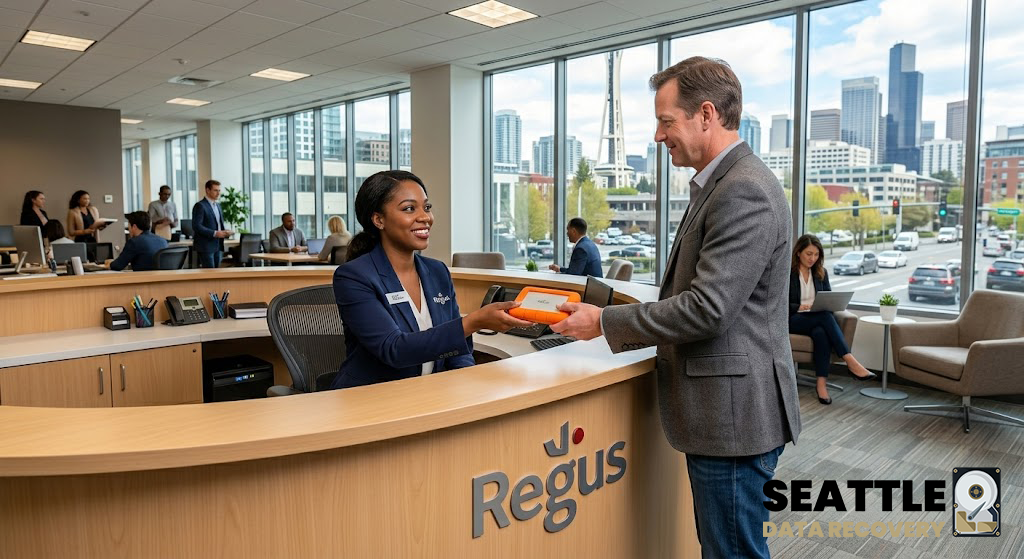
- Regus Reception Experience: Turn right out of the elevator cab to step into our corporate reception area, managed in exclusive partnership with Regus. Regus front-desk reception teams are globally recognized for elite administrative support, strict data privacy safeguards, and a polished corporate environment. Your hardware will be instantly logged into our secure system and placed under absolute custody tracking before entering our cleanroom engineering workspace.
Business Data Recovery Diagnosis | Seattle Data Recovery
Enterprise & Business Data Recovery Services in Seattle
Commercial Storage Architectures We Recover
- RAID Array & NAS Reconstruction (RAID 0, 1, 5, 6, 10, 50, 60):
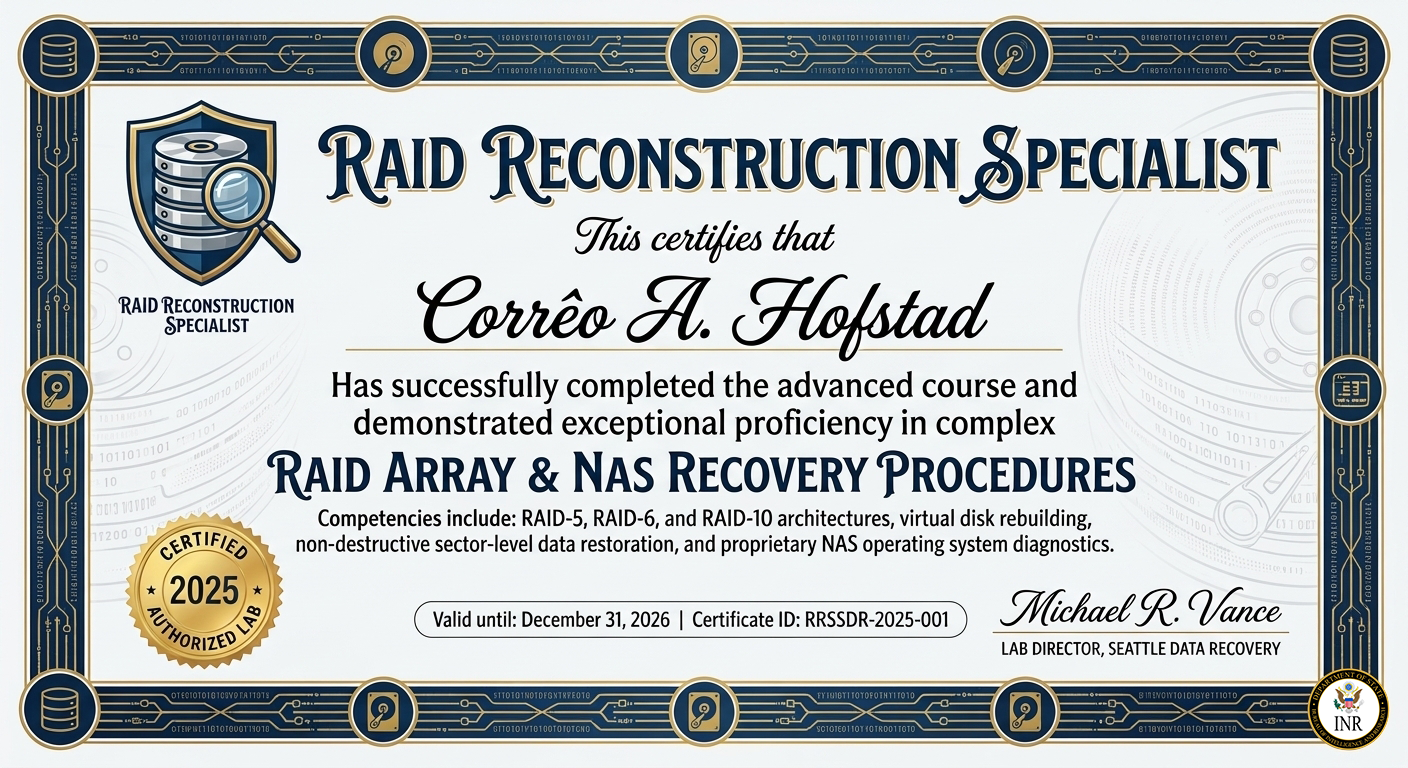
When an office Network Attached Storage (NAS) or Storage Area Network (SAN) experiences multi-disk mechanical dropouts or a corrupted controller, standard IT teams are locked out. Our laboratory engineers manually extract the raw metadata from each physical drive member, align the block allocations, and virtually rebuild the striped arrays using specialized hardware tools like the PC-3000 Portable III/SAS to fully recover fractured databases and virtual machine environments without risking array synchronization overwrite. - Mission-Critical Server Failure & Cloud Mirroring:
We specialize in recovering critical data from compromised physical server chassis, database servers (SQL, Oracle), and localized email networks. Our technicians securely extract the raw volumes, repair underlying firmware or physical drive components, and can seamlessly migrate your reconstructed data directly onto a brand-new target server or encrypted cloud container to minimize operational downtime. - Corporate Workstation Fleet Deployment (Mac & PC):
Whether your engineering team deploys modern hardware-encrypted Apple Silicon MacBooks or your administrative offices run localized Windows workstation fleets, we manage bulk corporate asset recovery. Our micro-soldering team specializes in board-level restoration to bypass integrated storage restrictions and recover individual employee data safely.
Enterprise-Grade Compliance, Security, and Facility Standards
- Guaranteed HIPAA & Privacy Compliance:
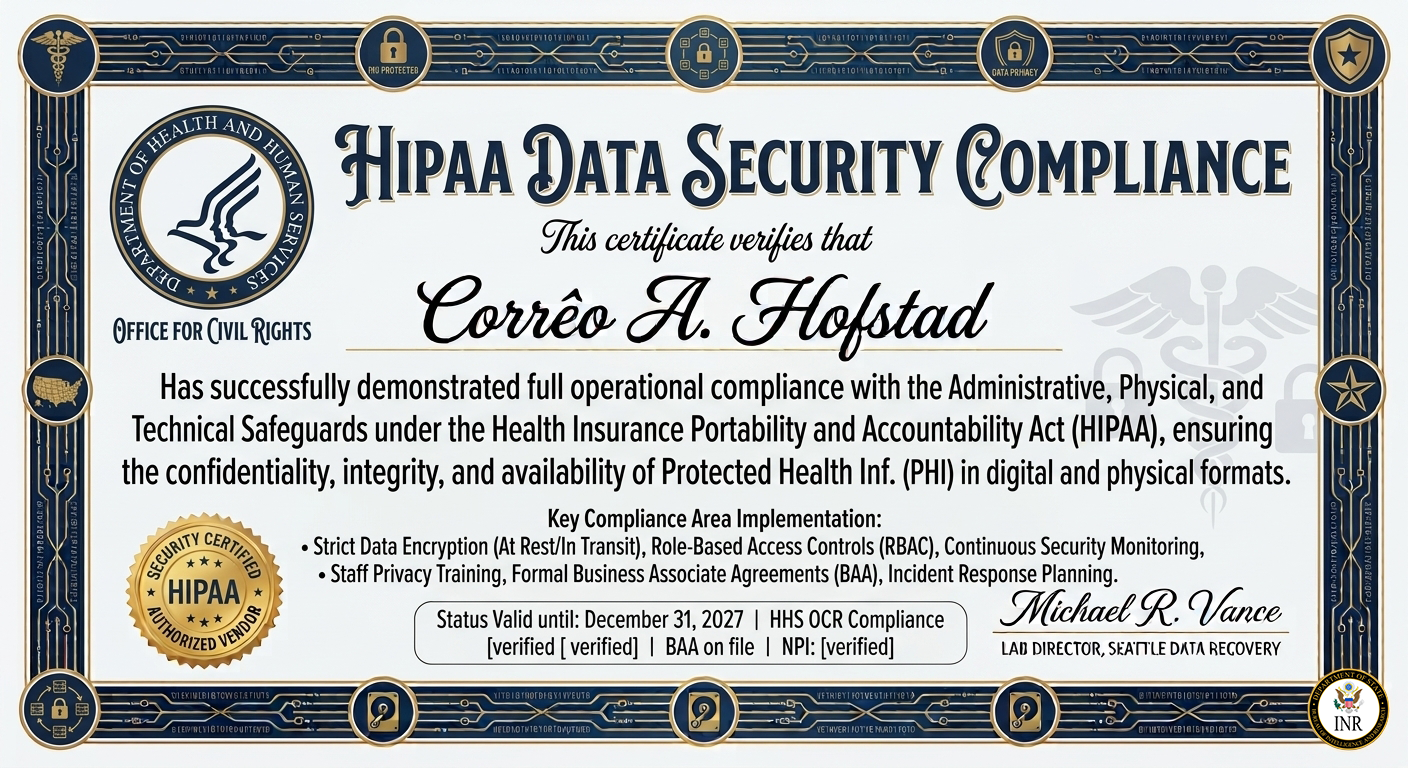
Our data recovery workflows strictly guarantee full compliance with HIPAA, SOC 2, and corporate privacy frameworks. We maintain a rigorous internal chain of custody, ensuring that sensitive employee data, financial records, and Protected Health Information (PHI) are never exposed to unauthorized personnel or external networks. - Secure Medical Waste & Hardware Disposal:
For data drives that are completely decommissioned or replaced during the donor parts phase, we employ strict, secure physical destruction and disposal protocols. Defective storage chips and magnetic platters are processed via specialized secure destruction paths that are completely inaccessible to outsiders, preventing data leakage. - Exclusive Medical Professional Environment:
Our primary business is located inside a secure medical professional building where local regulations strictly allow only medical and tech-certified doctors to work. This elite physical perimeter dramatically minimizes outside foot traffic and ensures a controlled, hyper-secure environment for your high-value corporate storage assets. - Certified Professional Staff:
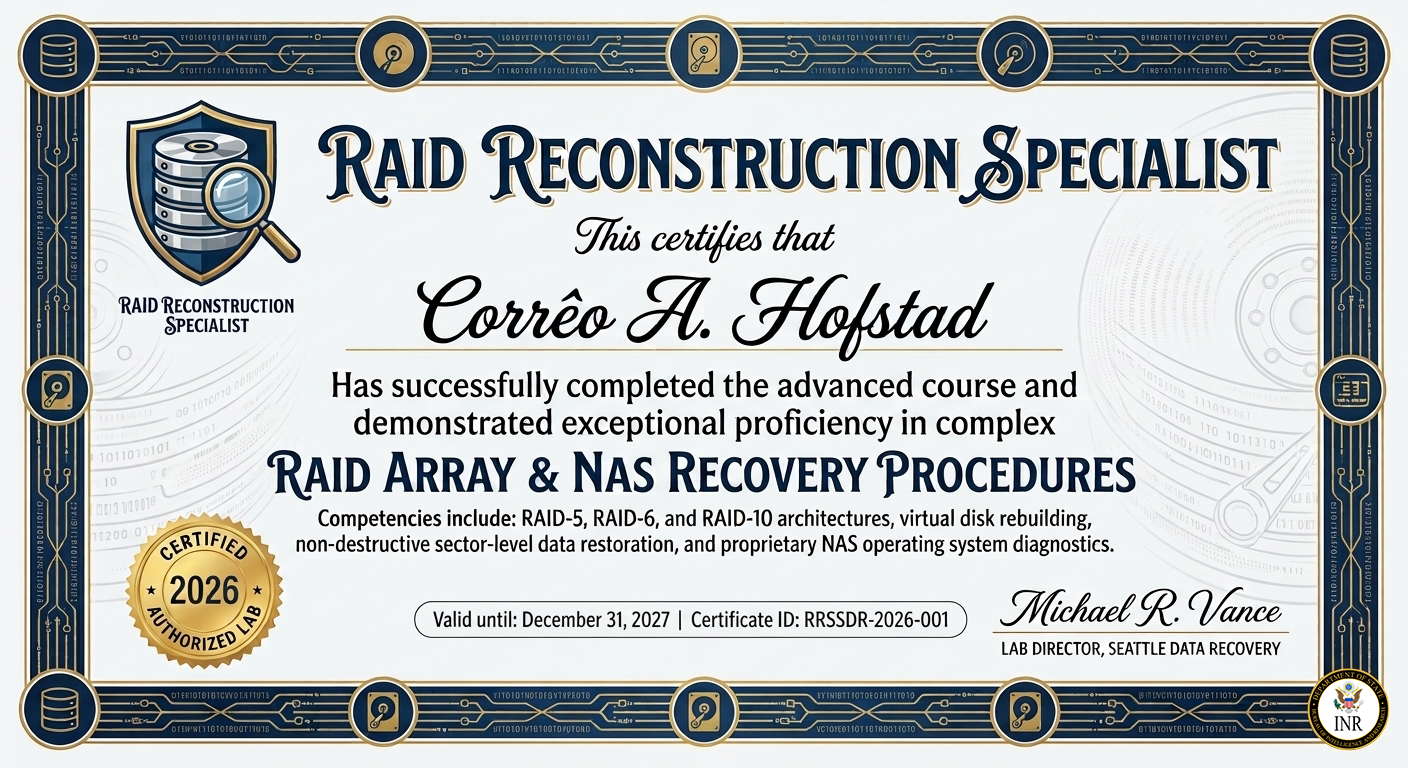
Every engineer handling your commercial media holds the latest industry-standard technology certifications. Our deep background across enterprise infrastructure ensures your data is handled with strict forensic precision from intake to completion.
Commercial Emergency Protocol for Seattle IT Managers
- Do Not Attempt Automatic Array Rebuilds: If a RAID array degrades due to a physically clicking or failing drive, initiating an automated "rebuild" command will force the remaining healthy disks to work at 100% capacity. This thermal and mechanical stress frequently triggers a second drive failure, corrupting the entire array structure permanently.
- Sever Power to Failing Units immediately: If an office server or storage node begins emitting unusual clicking, grinding, or beeping sounds, cut the power directly. Forcing a mechanically failing drive to stay online will physically shave the data coating off the disk platters, turning active corporate databases into unrecoverable dust.
- Isolate the Media from Retail Utilities: Avoid executing automated file-scraping programs or native system repair commands (like
chkdskor Mac First Aid) on an unstable server drive. These utilities resolve structural errors by aggressively re-writing data maps, which can permanently slice through the remaining fragments of your lost volumes.